Structured uncertainty, configurable by business need
Model what can change. Enable the uncertainty drivers you need across the Uncertainty Pentagon’s five dimensions, then optimize the Operational Plan and response playbooks together for aligned, execution-ready responses
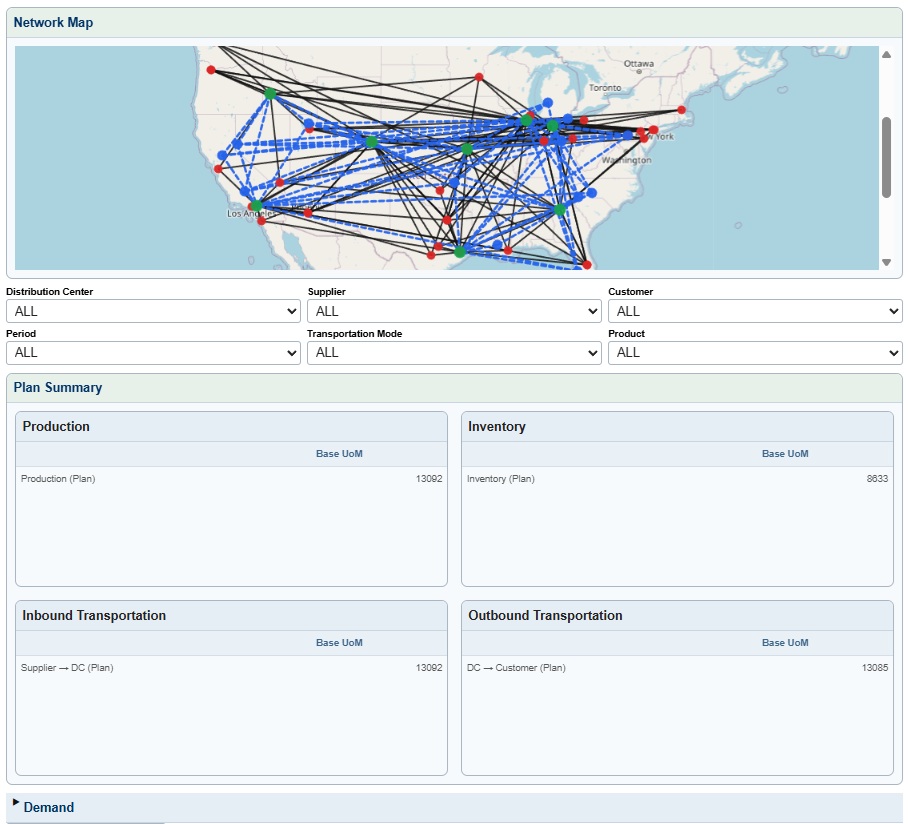
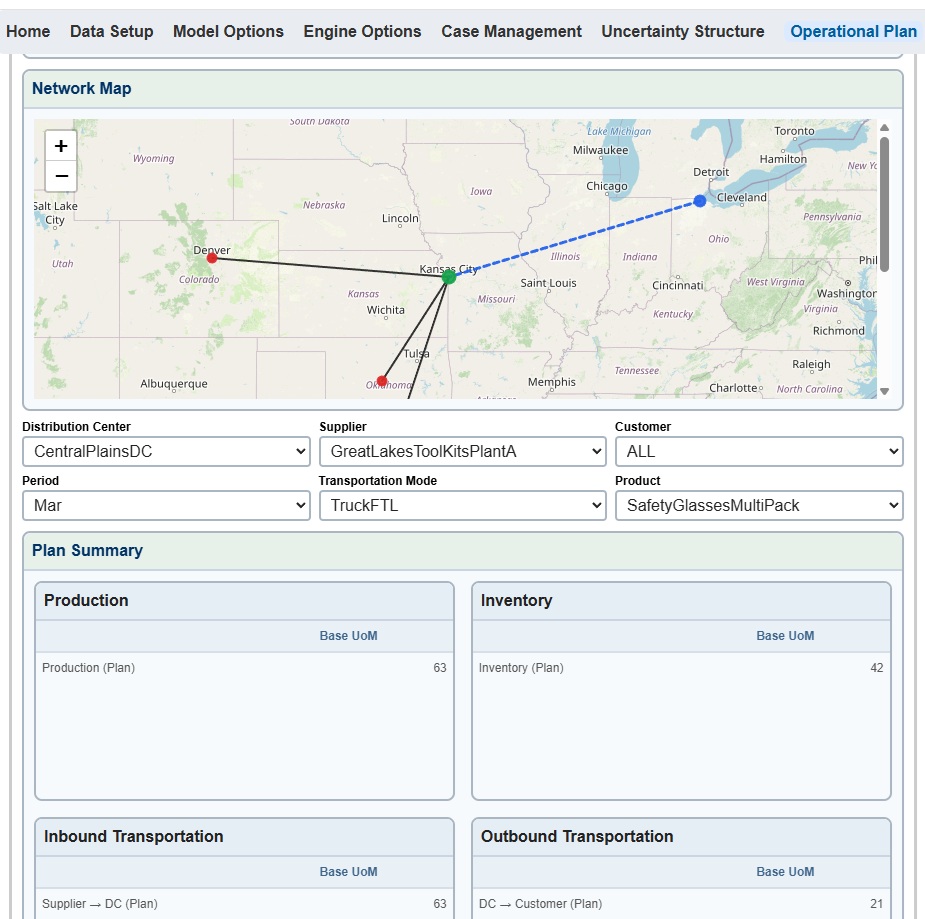
From Uncertainty Pentagon structure to aligned Operational Plan and response playbooks
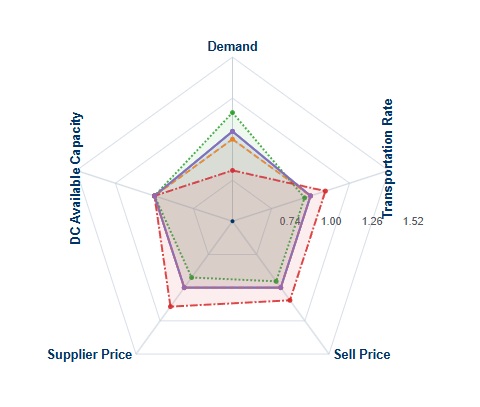
Each case structures uncertainty using the Uncertainty Pentagon across five primary drivers—Demand, Supplier Price, Sell Price, Transportation Rate, and DC Available Capacity. Ranges and joint patterns are made explicit so uncertainty is measurable, comparable, and actionable. Drivers can be enabled or disabled based on the business need; with all drivers disabled, the case reduces to a traditional deterministic network and supply chain optimization solve.
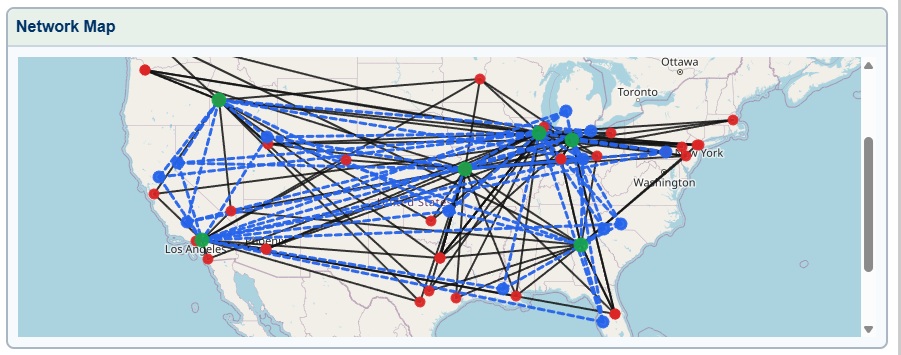
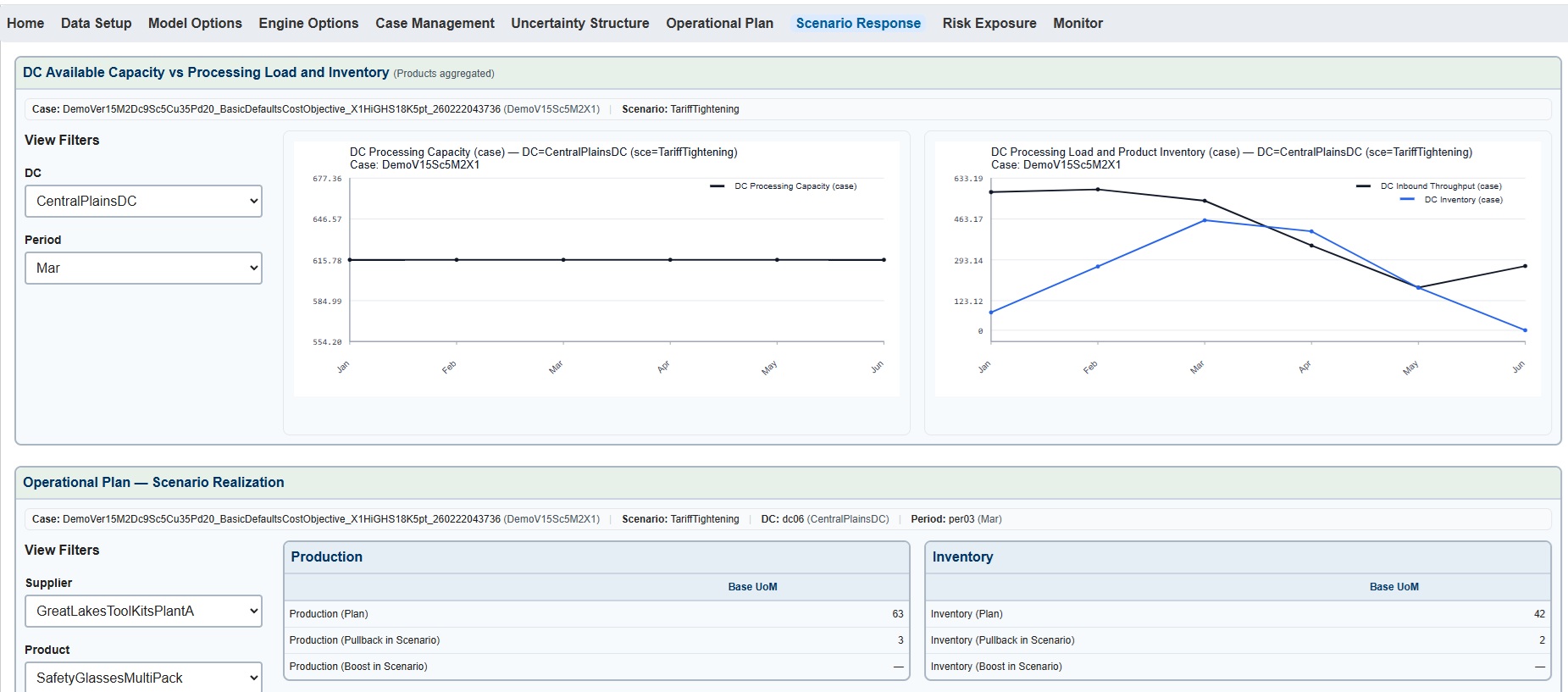
PentaTorch solves the case using the selected Stochastic Optimizer Engine, objective, and model configuration, optimizing decisions as one coherent system across network structure, sourcing, routing, production, and inventory, rather than solving scenarios in isolation.
The output includes an Operational Plan plus scenario-specific response actions that remain aligned with it. Response actions are expressed as operational deltas so teams can execute consistently when conditions shift.
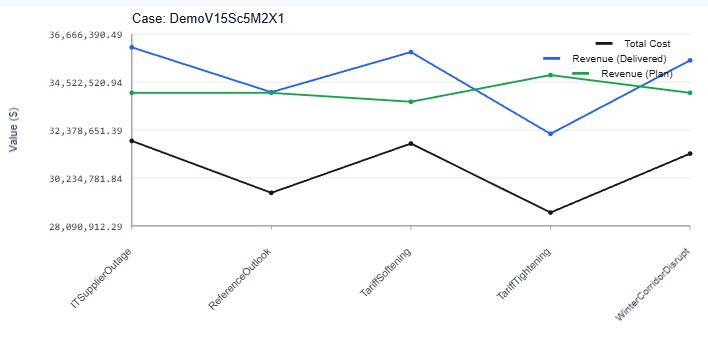
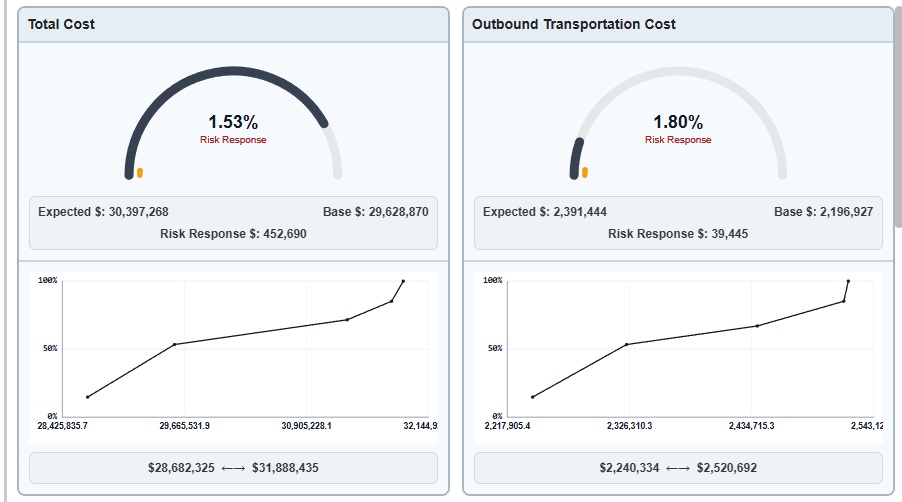
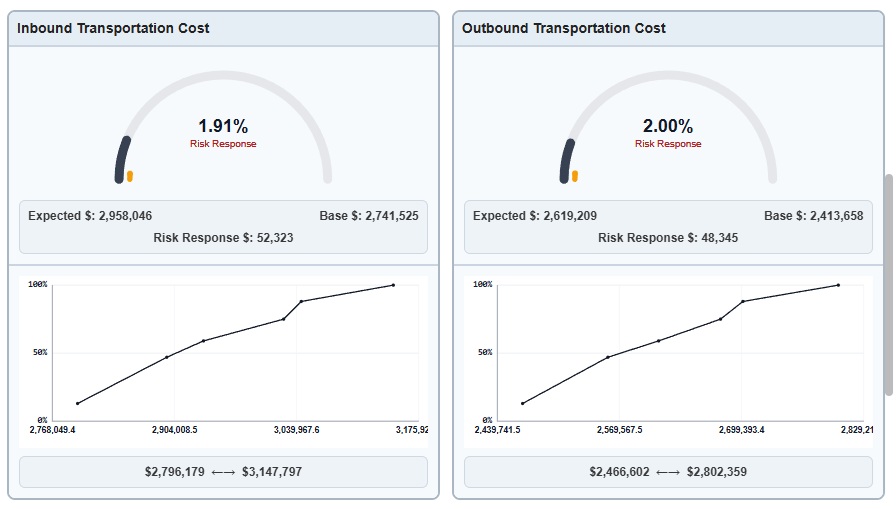
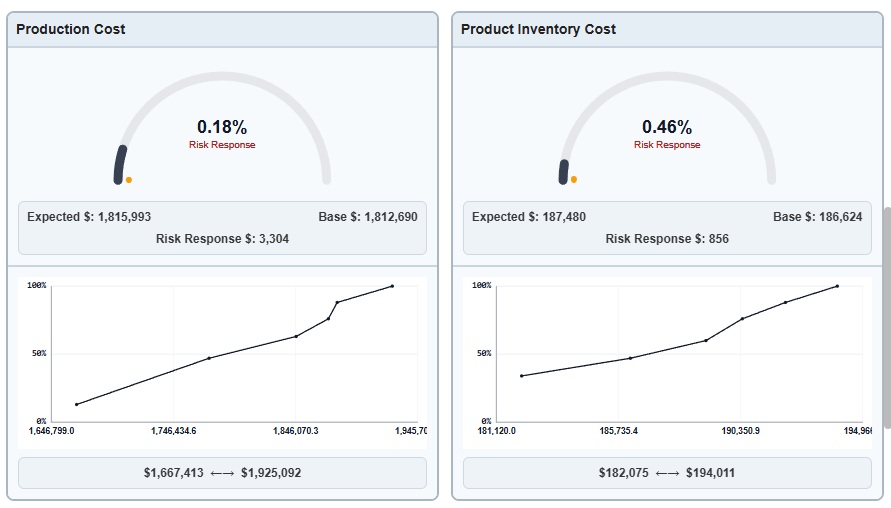
PentaTorch minimizes and reports the incremental cost of being prepared — Risk Response Cost — and breaks it into the major cost components (procurement, transportation, operations, inventory) so the economics of resilience are transparent.